Recovered archive. Dates, ages, roles and announcements reflect the original publication; they are not current updates.
In summer 2018, a group of members of the trans-Mediterranean organisation Maydan spent an extended period working in Camini, in Calabria’s Locride area, bringing a busy programme of cultural activities to life together with the local community.
Over the past two years, this small Calabrian municipality has been reborn, above all through shared management using modern public–private partnerships and the careful, integrated implementation of an “ordinary” SPRAR project — the Protection System for Asylum Seekers and Refugees. Ordinary in its official classification, its significance has been extraordinary: it has halted the loss of inhabitants that had first depopulated the village and then brought it close to disappearing. Today both the inland and coastal parts of Camini are coming back to life. Residents of all ages, from dozens of countries and language backgrounds, enrich the potential of this small but global town, already attracting international media attention.
Maydan’s first local initiative was co-organising International Youth Day, celebrated worldwide on 12 August. It was established in 1999 by UN General Assembly Resolution A/RES/54/120, honouring younger generations as responsible agents of global development who should be supported and valued.
The 2018 edition focused on “Safe Spaces for Youth — IYD 2018”, with the clear aim of discussing the creation of spaces worldwide where young people can feel safer and freer to express their identity and participate actively in community life.
Camini had already marked the day in 2017, under the UN theme “Youth Building Peace”. In 2018, Maydan made a decisive contribution to the local celebration, which some of its members had already helped organise the previous year. UN data identified it as Italy’s principal celebration. The theme was adapted to the particular work of the local community, in cooperation with organisations working together at different levels of youth participation. Generations who had migrated to and from many places, particularly around the Mediterranean, were actively involved, reinforcing Camini’s concrete ties with the wider world. This made the occasion an even stronger moment of shared growth for a community growing younger, thanks especially to the presence and cooperation of a substantial Syrian community.
The programme included a multilingual reading centred on the Manifesto of Mediterranean Citizenship, followed by a Mediterranean buffet. These were organised with the local community and numerous local, regional, national and international organisations, under the patronage of the Municipality of Camini and in the presence of the mayor, culture councillor Nicola Papandrea and local institutions.
More than two hundred people took part. Workshops enabled children and young people to develop concrete ideas and projects through co-creation activities aimed at rebuilding the town. They presented work on “An Ideal Youth-Friendly Town: Camini of the Future” to an expert panel, including Maydan’s co-president and secretary-general, mayor and architect Giuseppe Alfarano, and the culture councillor. The workshop concluded with a guided visit inside the town hall organised by the mayor and councillor.
Among the activities exploring the town and its safe spaces, open-door visits to Camini’s SPRAR project sites and the craft workshops being rebuilt were especially important and popular with visitors from many towns and other countries.
Alongside participatory workshops on collective social construction and resilient, inclusive cities, the young participants attended sessions on transnational mobility. These ranged from partnerships with southern Mediterranean countries in Region 3 of Erasmus+ for Education, Training, Youth and Sport 2014–2020 — covering organisations based in Algeria, Egypt, Jordan, Israel, Lebanon, Libya, Morocco, Palestine, Syria and Tunisia — to the European solidarity and volunteering service, the new EU initiative offering young people work or volunteering opportunities at home or abroad in projects assisting communities or people in need. Residents could also sign the European Citizens’ Initiative “Welcoming Europe”, supporting a welcoming Europe, through cooperation with members of its European organising committee.
In the days immediately after International Youth Day, fieldwork and support were provided to dissertation students and researchers from several faculties and international universities and higher education institutions. These included Iuav University of Venice, formerly Venice’s University Institute of Architecture; the Universities of Bologna and Florence; and Loughborough University in the UK. Particular attention was paid to the Mediterranean dimension of repopulation and community integration in an environment previously dominated by organised crime.
A cooperation agreement was also initiated with Amnesty International’s Italian section during its human rights volunteering camp, held for the first time in Camini and Riace from 2 to 9 August 2018. The camp examined narratives about welcoming newcomers and the stereotypes surrounding them through direct experience of interaction and social inclusion projects and practices.
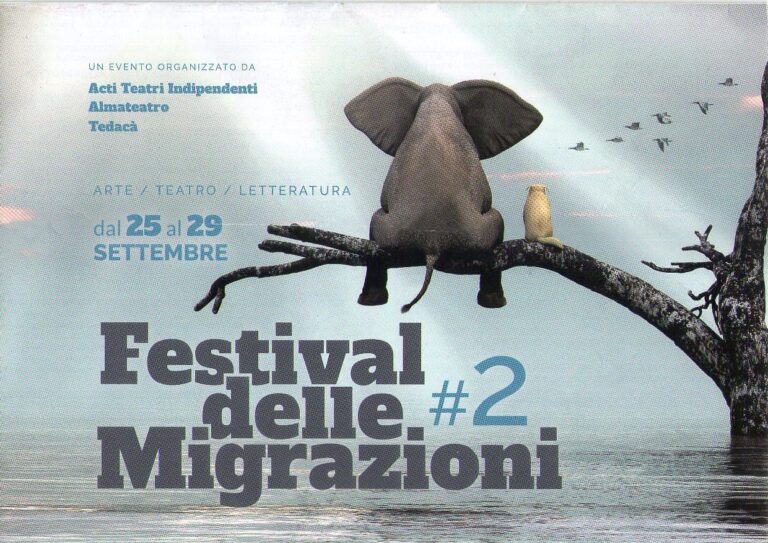
Elsewhere in the area, early August saw our participation in the eighth “Riace in Festival — Festival of Migration and Local Cultures”. In particular, we attended meetings with Gianfranco Schiavone and Lorenzo Trucco, lawyers from the Association for Legal Studies on Immigration (ASGI), and the presentation of Tiziana Barillà’s book Utopía de la normalidad. Riace, el modelo de acogida de Domenico Lucano (Icaria editorial, 2018). Those present included Barcelona mayor Ada Colau, Naples mayor Luigi De Magistris, and Domenico Lucano himself, mayor of Riace. Riace has become a symbol of welcome across the Mediterranean and worldwide; Lucano was consequently included by the US magazine Fortune among the world’s fifty most influential people. During those days we also gave mayor Ada Colau a copy of the Manifesto of Mediterranean Citizenship and began discussing strategies for building a shared space of citizenship, linking the Mediterranean shores in increasingly practical ways and moving beyond emergency responses.
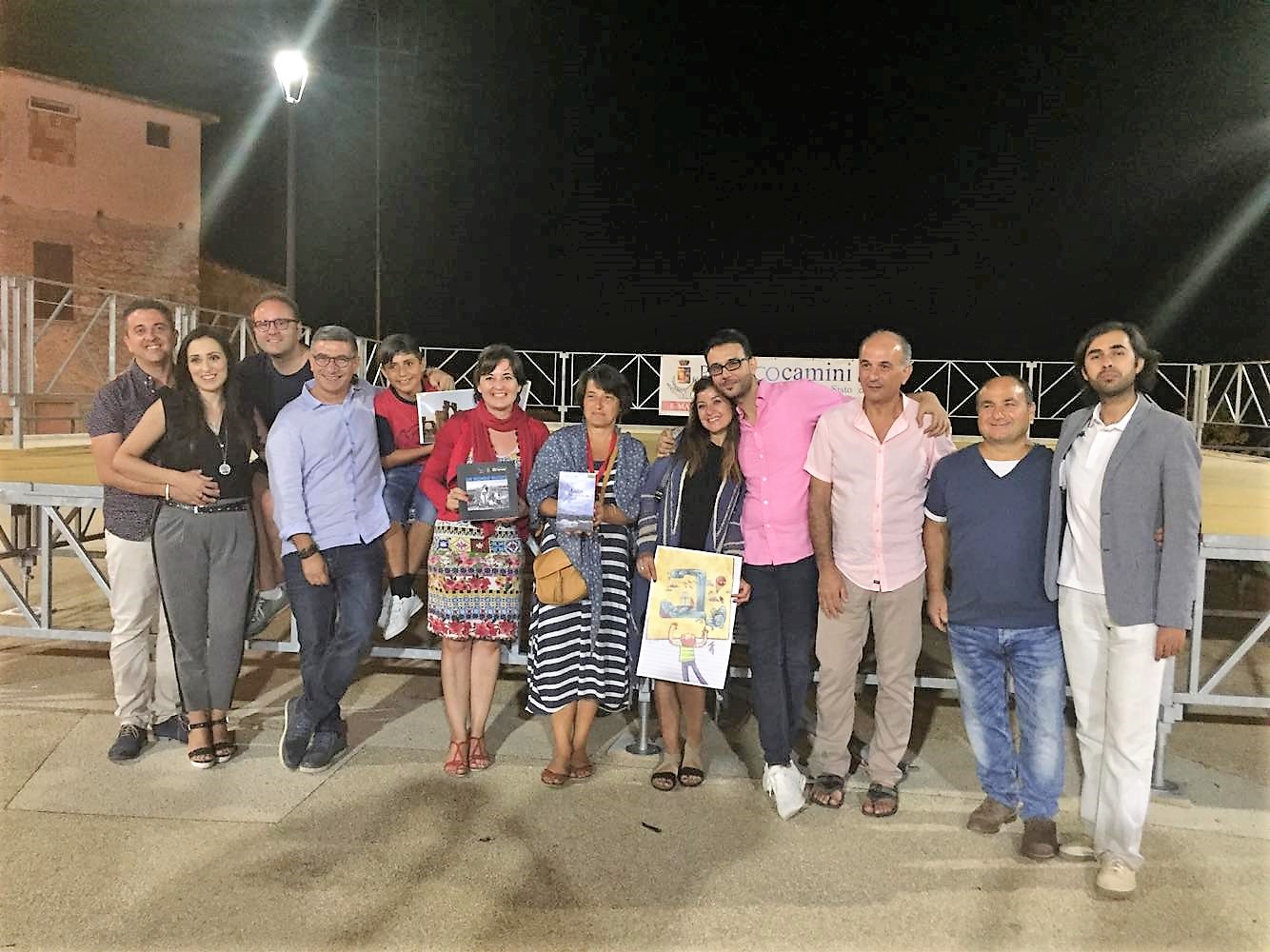
On Sunday 19 August 2018, we co-organised and moderated “Syria Seen from Here: Between Memory and Dream”, presenting Enzo Infantino and Tania Paolino’s book Kajin and the Tent beneath the Moon: Stories of Syrian Refugees on Greek Soil (Luigi Pellegrini Editore, 2018), with the authors present. All proceeds from the book go towards rebuilding a nursery school in Afrin, Syria. It draws on international volunteer Enzo Infantino’s experience in Greek refugee camps, where he repeatedly supported thousands of refugees forced to remain for months in Idomeni and other government-run settlements. His work took place through a solidarity network between Calabria and Greece, established at the same time and still operating.
With Camini hosting a substantial Syrian community, the presentation was also a valuable opportunity to try the “Junior Debate” format. Young bilingual residents of migrant origin, in this case from the very places depicted in the book, led the discussion and asked questions after specific preparation with experts in the method and intercultural mediators. For the first time since arriving in Italy, Syrian residents felt fully involved, thanks to interpretation by Syrian intercultural mediator Bassil, who came to Camini through a vocational traineeship opportunity in the area.
Alongside Maydan co-president Anna Lodeserto, participants included Camini mayor and architect Giuseppe Alfarano; Cosmano Fonte, president of Camini’s Pro Loco “Passarelli Rinaldo Sisto”; Rosario Zurzolo, president of the Eurocoop Servizi “Jungi Mundu” cooperative; and Giusy Carnà, coordinator of Camini’s SPRAR project. Carnà described the town’s reception projects, particularly those involving Syrian families and UNHCR’s Resettlement programme.
A few days later, Camini suffered a serious act of intimidation directed at its mayor. Since his election just two years earlier, he had worked to revive the village and develop its economy, also contributing his professional skills and experience as an architect.
Our organisation expressed solidarity and support for the community, immediately meeting the institutions concerned again and committing to bring people’s efforts together so that ongoing projects could continue peacefully.