Recovered archive. Dates, ages, roles and announcements reflect the original publication; they are not current updates.
The Maydan Association is introduced in Reggio Calabria. A new international initiative promoting Mediterranean citizenship, including through a Manifesto, begins in the city on the Strait.
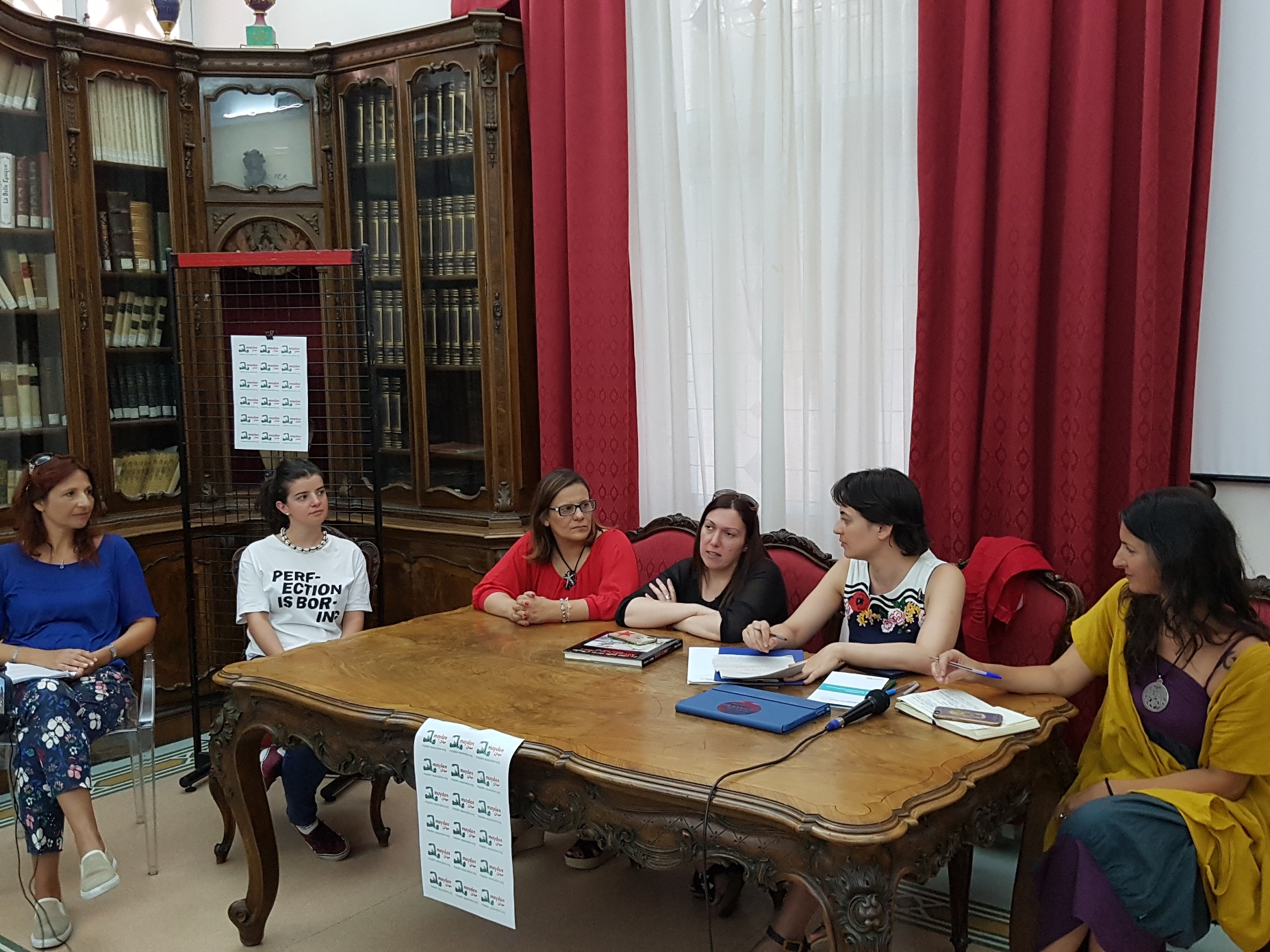
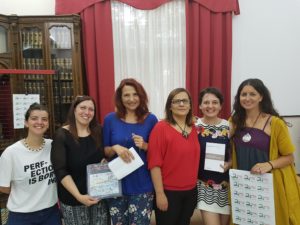
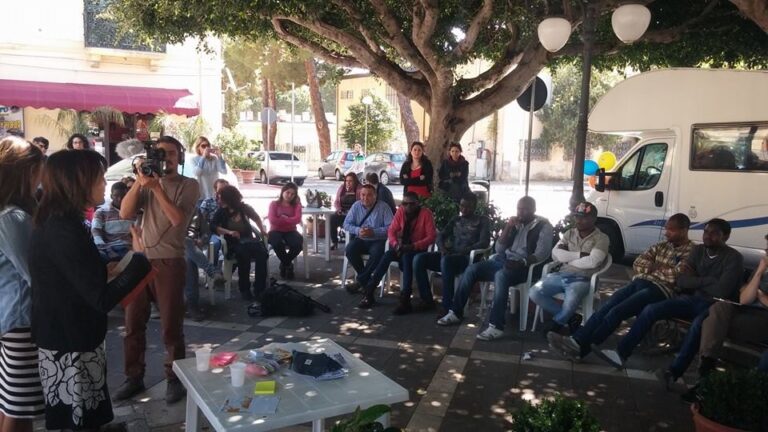
The Maydan Association, which emerged from the Calabrian and Sicilian intercultural festival SabirFest, was presented on 23 July 2018 at the library in the Pietro de Nava gardens. Although international in outlook, it has chosen Reggio Calabria as its legal and operational base: a city whose recent history has become intertwined with the Maghreb through countless migrant landings, and where organisations with Maydan’s broad international vision are particularly scarce.
“Our goal is participatory citizenship,” said Maria Lucia Parisi, Maydan’s driving force in Reggio. “During SabirFest 2017, the first edition held in Reggio as well as Messina and Catania, the activists organising the festival were struck by the extraordinary involvement of local people and recognised its potential, including at institutional level. A dream nurtured since 2014 is now becoming reality, giving wings to a cultural bridge of interaction and shared growth.”
One of its tools is the Manifesto of Mediterranean Citizenship. “This document has not yet taken its final form,” Parisi explained. “Through our platform, too, we would like to make a significant contribution and offer guidelines for a Manifesto that we want to be a collective endeavour, with the broadest possible participation. It should not feel like something put together exclusively by activists, but like a genuinely participatory form of citizenship.” The presence of Lucia Anita Nucera, the municipal councillor responsible for Welfare and Linguistic Minorities, and Michela Calabrò, chair of the Equal Opportunities Commission, gave tangible expression to cooperation with the City of Reggio Calabria.
“We chose Reggio Calabria over several other cities in southern Italy and on the Mediterranean’s southern shore that had put themselves forward or been proposed as Maydan’s headquarters,” explained association co-president Anna Lodeserto. “We immediately saw that the city possesses valuable resources, even if these are no longer connected internationally in the constructive and productive ways they once were. Reggio has also never held back from important experiences of cross-partnership.” The overarching aim? “Mediation towards a Mediterranean understood as a common destination,” in the spirit of a Manifesto that “promotes the idea of an extended, shared citizenship”. This builds on what was then Sabir Maydan, conceived, developed and drafted, though not in final form, over the preceding five years.
Underlying this is the idea of “working through knowledge”: for example, creating a portal to exchange skills and professional opportunities between the Mediterranean’s two shores, so that the region can again become a place of encounters, exchange and cross-fertilisation. It also means “reversing centre–periphery dynamics. It is not true that Calabria is the region at the very edge of this area,” Lodeserto observed. “It must once again be the centre of the Mediterranean, which is what it actually is.”
“Maydan means ‘square’ in Arabic,” said Debora Del Pistoia, who moved from her native Tuscany to Tunisia for work years ago. “It is therefore a place of encounter. Since 2014, we have sought out and created spaces for meeting, including in person, with key moments such as the 2015 Social Forum in Tunis and an increasingly Mediterranean vocabulary. We have been creating more and more squares, more maydans like those of the Manifesto, which has already been translated into many languages.” Councillor Nucera, affirming her commitment to open ports and Calabrian hospitality, offered to translate it into the ancient Greek still spoken in a few areas along Reggio’s Ionian coast.
The geographical boundaries of the Mediterranean were also addressed: “For us it is a social and cultural space that includes eastern Europe, not just the places physically bordering the sea. Together, we are now called upon to build a new, inclusive language for a peaceful future.”
As Lidia Lo Schiavo concluded: “It is not just me, as a professor of Sociology at the University of Messina; I believe all of us are driven by this passion and this desire to build. In that sense, we approach things with a spirit of inquiry. The idea is to dismantle stereotypes, which can be even higher than the physical walls built in one country or another to divide what is, in fact, connected. Ultimately, the Mediterranean will be what its women and men want it to be. Today, discussion struggles to escape the framework of pushbacks and expulsions. Instead, we need to reflect on the actual outcomes of the Arab Spring, leave behind rigid notions of belonging and act together to achieve common goals.”
“As Hannah Arendt said, citizenship is the ‘right to have rights’: something that enables people.” Lo Schiavo reiterated that the Manifesto has political as well as cultural significance: “The issue is not to politicise its content, but to be citizens. And being citizens means being present in the public sphere.”
Today, “when it feels as though we have returned to a time before the post-war settlement, with a new racism and, if you will, a new fascism, it is important to hand future generations the tools of memory. Nobody has magic solutions, and the red T-shirt initiative, however commendable, is not enough. We must build cooperation, with everyone’s help.”