Recovered archive. Dates, ages, roles and announcements reflect the original publication; they are not current updates.
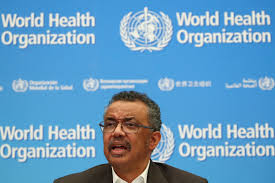
Khalid Mansour questions the World Health Organization’s role in the Covid-19 crisis and the flimsy assumption that bodies such as WHO are truly independent. He describes them as battlegrounds between governments and arenas of struggle among major donors. Criticism grows, from America’s leadership to the “man in the street”, over their “failure” to find effective solutions to conflict, poverty and disease. WHO’s main work in this crisis has become providing emergency aid and painkillers, and issuing statements of concern, sometimes profound. An urgent question arises: have UN organisations outlived their time? Founded after the Second World War, nearly eighty years ago, should they be retired before an impending death?
Egyptian journalist and writer Khalid Mansour focuses on human rights. He worked as a journalist in Egypt, South Africa and America, and at the United Nations, and has written about conflict areas including Afghanistan, Lebanon, Iraq and Sudan. This article originally appeared in Daraj.
A few months into my work at the United Nations, I sat complaining to a friend in the international staff guesthouse in Kabul. We were having drinks in the garden after dinner on a summer evening. My tongue ran away with me as I described the organisation’s failure to stand up to the Taliban on one side and American and European donors on the other, and the extent to which we dressed up this dismal reality in our press conferences and annual reports.
“We simply lie to get more money for programmes that I don’t believe deliver what we promise. We don’t give false information or lie in that sense, but we lie because we don’t tell the whole truth and hide half the reality,” I said bitterly. The seasoned man, who had entered the field twenty years before me, agreed. Then he laughed: “We have no better alternative. Most of what we say publicly or try to achieve on the ground expresses a hope and a dream that we must keep holding on to. The collapse of these organisations would bring only bitter disappointment and profound despair.”
Now, twenty years after that conversation, I am no longer sure he was right.
Questions about UN organisations’ effectiveness seldom reach the forefront of the world’s usually scattered attention, especially during an unprecedented global crisis such as this pandemic. But the chief of the political clown chorus, who also happens to be president of the United States, decided to attack WHO. Once again we find ourselves debating UN organisations’ weakness and failure, the need to change their officials and rules, or even rid ourselves of this recurring headache by closing them altogether.
Are the organisations really independent?
UN organisations now face several challenges they helped create by exaggerating their role, importance and ability to change human reality. Meanwhile the flimsy assumption persists that they are truly independent, rather than what they actually are: battlegrounds between governments and arenas of contention among major state and institutional donors. On this basis, criticism mounts from Trump to the “man in the street” over their “failure” to find effective solutions to conflict, poverty and disease. Their principal work has become providing aid and painkillers, issuing statements and expressing concern, sometimes profound. Then the familiar question slaps us in the face: have UN organisations outlived their time? Were they not founded for the world that emerged after the Second World War, now nearly eighty years old, deserving retirement before an imminent death?
All this criticism is valid, but closing the organisations is not a solution — not yet! Nor is that option seriously on the table for the countries that collectively control them to differing degrees. The better question remains how to intervene to stop these vast institutions eroding, some sinking further into old age and others having their names forgotten. Reform is the only path, unless an international revolution is already underway without our knowledge, poised to reorganise international relations, tighten the implementation of international law and force states to obey through international courts and global armed forces!
WHO and its response to Covid-19 since the end of last year clearly illustrate this complex reality. It answers to the World Health Assembly, made up of government delegates from the 194 states that signed its constitution. The assembly has a few duties, chiefly electing the director-general and approving the annual budget, assisted by a 34-member executive body periodically elected from member states. WHO’s capacities depend on what those states want, and it has no authority to impose specific measures. It may, for example, declare a worldwide health emergency, as it has done five times over the past ten years, most recently a short while ago. But this gives it no power to close borders, impose curfews or allocate billions of dollars to research addressing the catastrophe. These steps all lie with governments and major companies.
Organisations facing governments
Ultimately, the problem is not China’s — or America’s — manipulation of international organisations including WHO. The entire system is built around such manipulation by member states within relatively flexible rules. Only better rules and practices, committed to transparency and democratic accountability, can reduce it. Even that will not turn WHO into a global health ministry while the principal global actors remain states and governments, rather than international organisations.
UN organisations have, for example, successfully organised decolonisation in several countries, standardised telecommunications and trade, and designed and helped implement global vaccination campaigns that eliminated epidemics including smallpox and plague and are rapidly approaching the eradication of polio. Yet they have failed to control conflicts, establish peace, reduce poverty and inequality, or entrench respect for human rights.
Before Trump’s storm against WHO, its director-general and former Ethiopian foreign minister, Tedros Adhanom Ghebreyesus, expressed deep disappointment at major governments’ conduct during the pandemic. Journalists pressed him and the organisation’s Covid-19 team leader, Irish doctor Mike Ryan, to name those countries — China may have been one. Ryan said only: “Those countries know who they are. As for us, as you know, we cannot criticise member states.”
Anyone who has read a little history knows the circumstances in which UN bodies emerged: political ones such as the Security Council and Secretariat; economic and financial ones such as the World Bank, IMF and World Trade Organization; and a third group of funds, programmes and organisations addressing health, food, shelter, natural disasters and human conflict. Many people weary us by saying that the circumstances of their birth have changed since the 1940s but the organisations have not. This is untrue. They too have changed and evolved, ultimately reflecting a balance between the distribution of global power, competing systems of values and contested interpretations of international law. All this leaves room to influence and change them. As my experienced friend argued that pleasant Kabul night, a few months before American missiles rained down after 11 September, such reform remains better than despair and taking a hammer to these organisations’ heads.
7 June 2020.